Amir Perry · 20 October 2026
Data on Anchor Displacement Caused by Burrowing Animals in Freestanding Outdoor Platform Installations
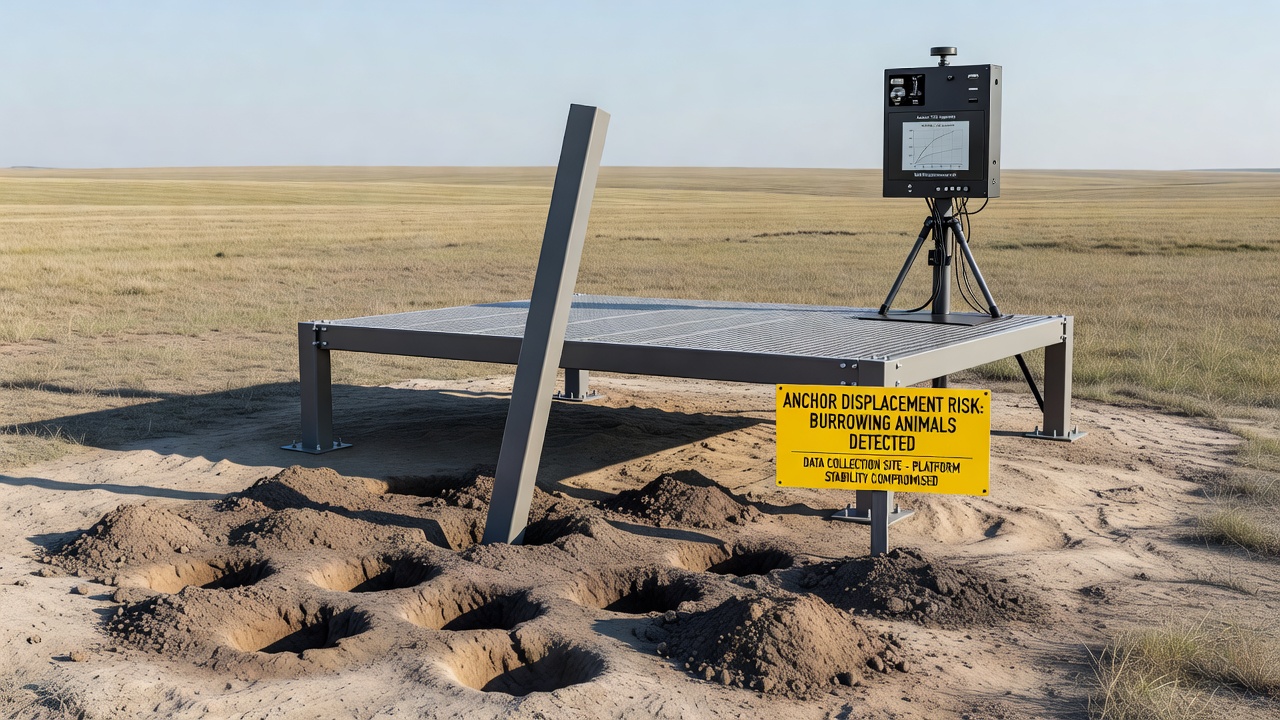
Freestanding outdoor platform installations rely on anchor systems to maintain stability across varied terrain, yet burrowing animals introduce measurable shifts in those anchors through repeated tunneling and soil displacement. Researchers track these movements using sensors embedded at anchor points, and data collected over multiple seasons reveals consistent patterns of gradual migration in anchor positions. Studies from multiple regions document how species such as moles, ground squirrels, and rabbits create networks of tunnels that intersect with anchor zones, leading to measurable lateral and vertical displacements ranging from several millimeters to several centimeters per year depending on soil type and animal density.
Patterns of Animal Activity Around Platform Anchors
Burrowing species concentrate activity near structural elements because the disturbed soil around anchors offers easier excavation compared with compacted ground, and observers note that tunnels often follow the path of least resistance along the perimeter of platform footings. Data from field monitoring shows peak activity periods in spring and fall, with October 2026 reports from long-term sites indicating accelerated displacement rates as animals prepare winter burrows. Those who've studied these interactions find that anchor movement correlates strongly with tunnel proximity, where anchors within 30 centimeters of active tunnels experience up to three times the displacement of those farther away.
Measurement Techniques Used in Field Studies
Teams employ laser levels, inclinometers, and time-lapse photography to record anchor positions at regular intervals, and the resulting datasets allow calculation of average annual displacement rates across different installation types. One study revealed that platforms installed on loamy soils recorded average anchor shifts of 4.2 centimeters over 18 months, whereas those on clay-heavy substrates showed reduced movement averaging 1.8 centimeters in the same period because denser soil resists tunnel expansion. Researchers cross-reference these measurements with wildlife surveys that count burrow entrances within a 10-meter radius of each platform, establishing direct relationships between animal population density and anchor instability.
Regional Data Sets and Environmental Influences
Collections of data from North American sites indicate higher displacement in areas with sandy soils that facilitate rapid burrowing, while Australian monitoring programs report similar trends among rabbit populations affecting elevated deck anchors. CSIRO wildlife impact assessments provide comparative figures showing seasonal peaks that align with breeding cycles. In European contexts, data from agricultural research stations demonstrate that platforms near hedgerows experience greater anchor migration because these linear habitats support higher densities of burrowing mammals. Soil moisture levels further modulate outcomes, with saturated conditions after heavy rain allowing easier tunnel construction and therefore increased displacement during wet periods.
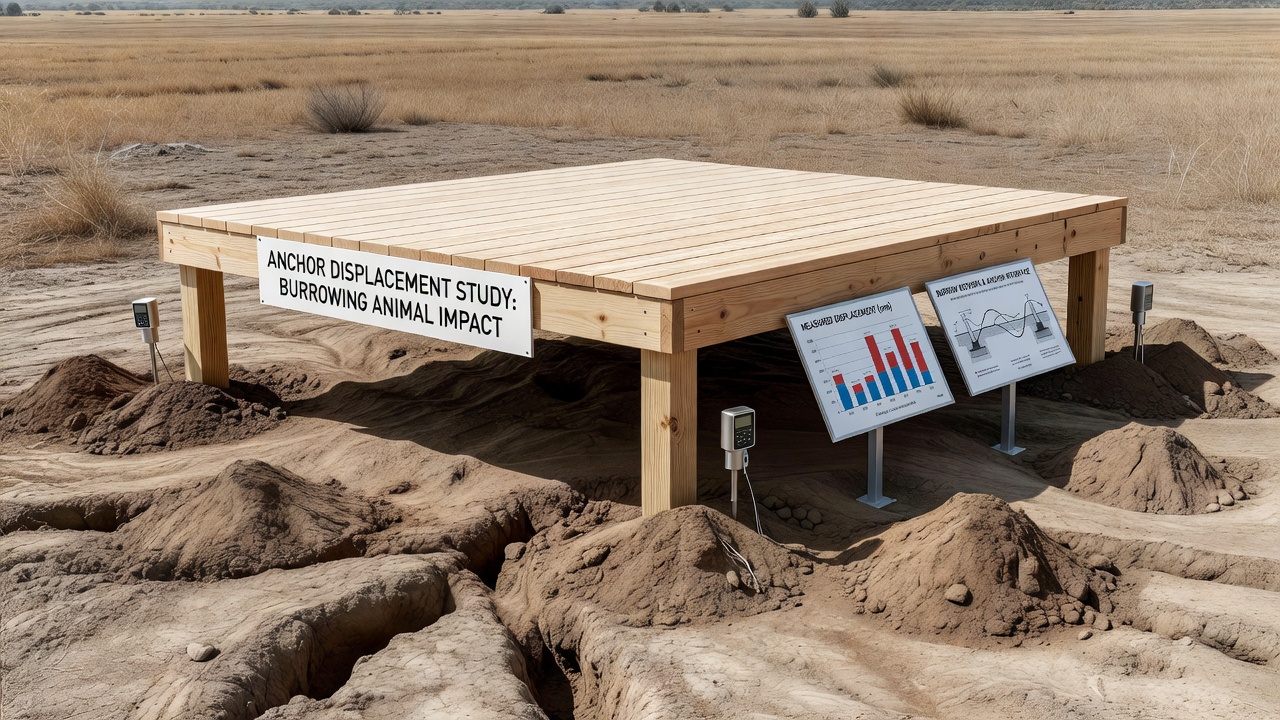
What's interesting is how vegetation cover influences outcomes, since platforms surrounded by dense ground cover attract more burrowing activity than those in open clearings. Figures reveal that anchor displacement accelerates when tunnels undermine the load-bearing zone directly beneath footings, creating voids that permit settling under the platform's own weight. Monitoring programs that began in 2024 and continued through October 2026 have accumulated enough longitudinal data to identify thresholds where cumulative displacement begins to compromise structural connections at the anchor head.
Installation Variables That Affect Outcomes
Anchor depth, diameter, and material composition all interact with burrowing pressure, and installations using deeper helical anchors demonstrate lower displacement rates than those relying on shallow driven rods because the deeper units sit below typical tunnel depths. Data indicates that adding mesh barriers or gravel collars around anchor points reduces animal access, though effectiveness varies by species and local soil conditions. Platforms built with multiple redundant anchor points distribute loads more evenly, which limits the impact of any single anchor shifting position. Those who've examined post-installation records note that sites with regular vegetation management around the structure perimeter record measurably lower animal activity and correspondingly smaller anchor movements over time.
Comparative Analysis Across Soil Types
Comparative tables compiled from monitoring networks show that silt-based soils permit the highest displacement rates, followed by sand, loam, and finally clay, where tunnel stability is lower and collapses more frequently. USGS soil science publications supply baseline data on these substrate differences that researchers apply when modeling expected anchor behavior at proposed installation sites. The interaction between soil particle size and tunnel architecture determines how much lateral pressure reaches the anchor shaft, and models calibrated with field measurements now predict displacement ranges for new projects with reasonable accuracy.
Conclusion
Accumulated measurements demonstrate clear, quantifiable links between burrowing animal activity and anchor displacement in freestanding outdoor platforms, with displacement magnitude governed by soil characteristics, anchor design, and local wildlife density. Monitoring programs that continue through periods such as October 2026 continue to refine these relationships, supplying installation teams with evidence-based parameters for site assessment. The resulting datasets support decisions on anchor selection, barrier installation, and maintenance schedules that address the specific pressures recorded at each location.