Erik Brooks · 8 September 2026
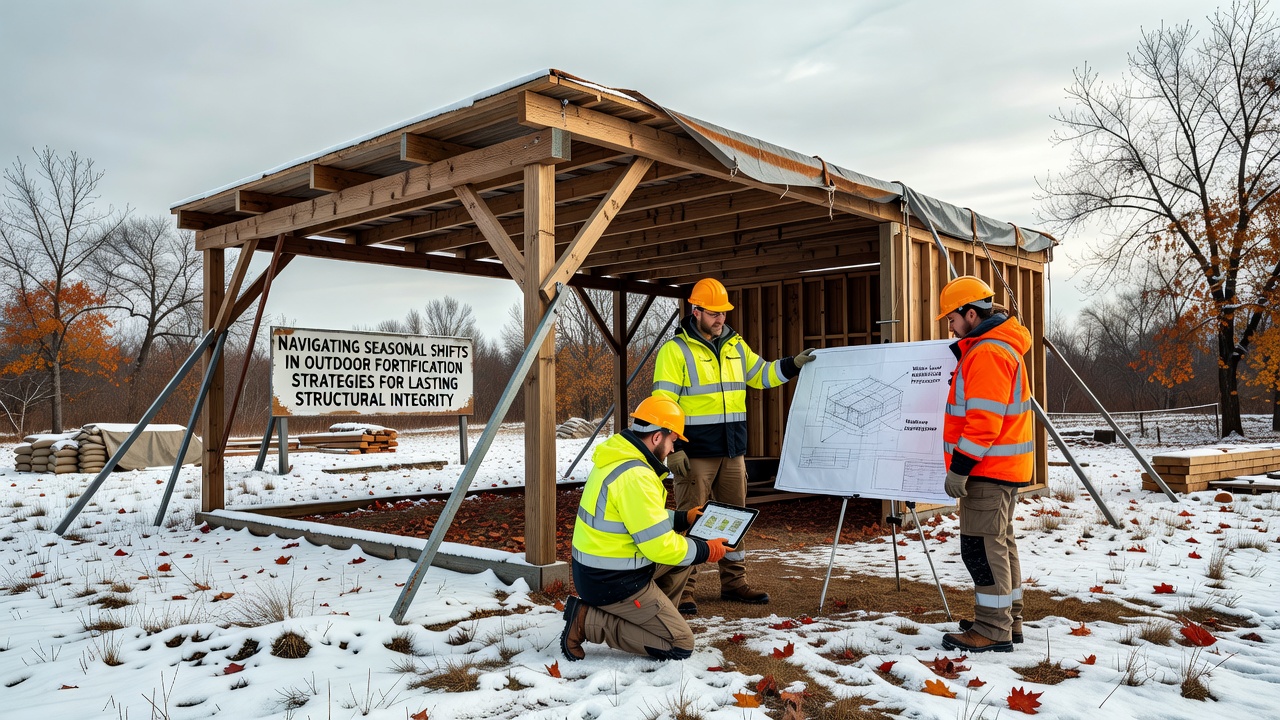
Navigating Seasonal Shifts in Outdoor Fortification Strategies for Lasting Structural Integrity
Seasonal shifts place consistent demands on outdoor structures, from decks and fences to retaining walls and sheds, and data from multiple regions shows that proactive adjustments in fortification methods help maintain integrity across temperature extremes and moisture variations. Researchers at institutions studying material performance have documented how freeze-thaw cycles, prolonged heat, and heavy precipitation accelerate wear when initial designs overlook regional climate patterns. According to findings compiled by the National Research Council Canada, structures built with adaptive reinforcement techniques demonstrate measurable reductions in annual repair needs compared with standard installations.
Climate records indicate that temperature swings in temperate zones often exceed 30 degrees Celsius between summer peaks and winter lows, which creates expansion and contraction stresses in wood, concrete, and metal components alike. Those who monitor long-term performance note that humidity fluctuations compound these effects by promoting rot or corrosion at joints and fasteners. In September 2026, updated modeling from meteorological agencies projects continued variability in precipitation patterns across North America and Europe, underscoring the value of strategies that address both immediate and cumulative seasonal pressures.
Material Performance Across Temperature Ranges
Selection of base materials forms the foundation of lasting outdoor fortifications, and studies from the Commonwealth Scientific and Industrial Research Organisation in Australia reveal that engineered composites and pressure-treated timbers retain structural ratings longer under cyclic wetting and drying than untreated alternatives. Galvanized steel hardware resists oxidation more effectively in coastal or high-salt environments, while stainless variants provide additional margins in areas with frequent acid rain events. Observers tracking field installations report that pairing these materials with flexible sealants at connection points reduces cracking caused by differential movement during rapid weather changes.
Concrete mixes incorporating air-entraining agents have shown improved resistance to freeze-thaw damage in laboratory tests conducted across multiple climate zones, and field data confirms that proper curing times before first exposure to frost further extend service life. Those managing large-scale projects often combine these mixes with fiber reinforcement to limit surface spalling when ground moisture expands during winter months.
Design Adaptations for Moisture and Wind Loads
Effective drainage and elevation details prevent water accumulation that leads to foundation erosion, and engineering guidelines emphasize sloping surfaces away from load-bearing elements by at least two percent. Roof overhangs and drip edges direct runoff beyond wall bases, while vapor-permeable barriers beneath cladding allow trapped moisture to escape without promoting mold growth. Wind tunnel research conducted at European universities has quantified uplift forces on elevated decks during storm events, leading to recommendations for hurricane ties and deeper embedment of posts in high-wind corridors.
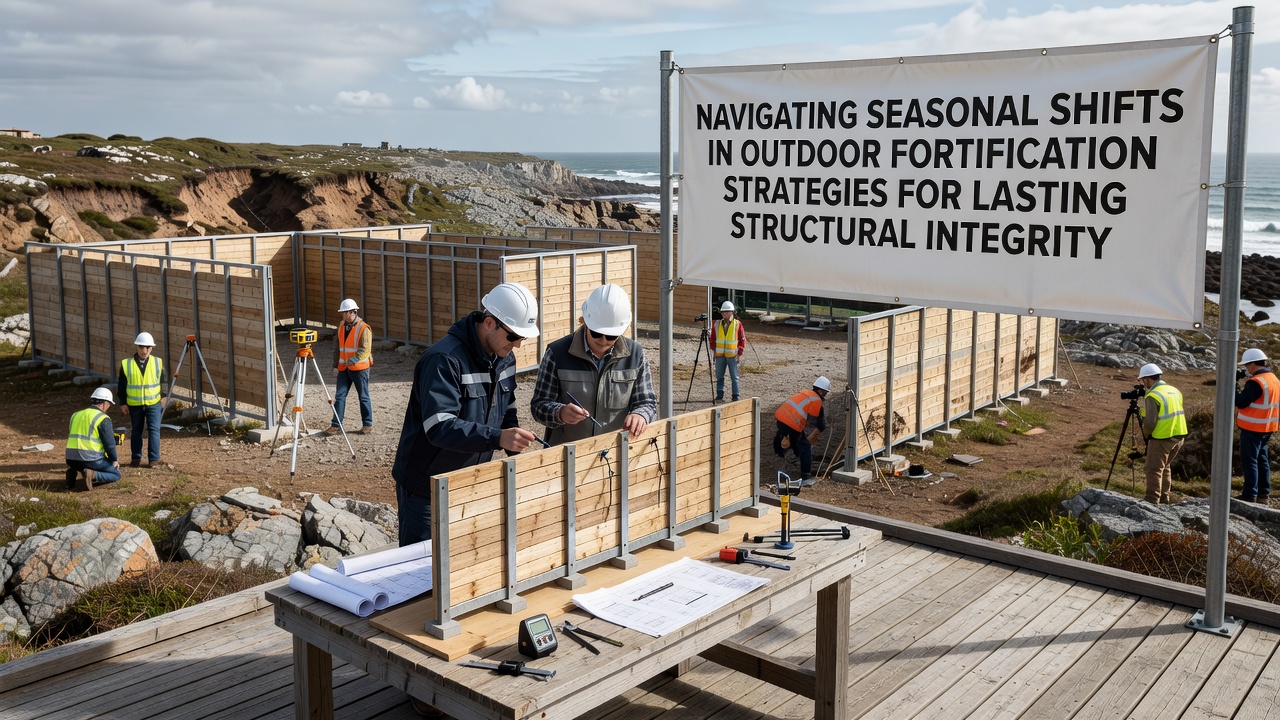
Modular anchoring systems permit seasonal repositioning or reinforcement in regions where soil heave occurs, and installers document fewer failures when these systems replace rigid footings in clay-heavy soils. The reality is that combining these design elements with regular inspection intervals catches early signs of stress before they propagate through entire assemblies.
Maintenance Protocols and Inspection Timing
Scheduled inspections timed to seasonal transitions allow early detection of surface degradation or fastener loosening, and maintenance logs from commercial properties indicate that biannual checks coincide with peak periods of environmental stress. Cleaning debris from drainage channels before autumn rains and reapplying protective coatings after winter reduce cumulative moisture intrusion. Data collected by facilities management teams shows that prompt replacement of compromised sealants prevents water migration into structural cores during spring thaws.
Specialized coatings formulated for ultraviolet resistance maintain elasticity across temperature cycles, and manufacturers provide application temperature ranges that align with shoulder seasons when surfaces are dry yet not excessively hot. Those responsible for public spaces often coordinate these tasks with local weather forecasts to maximize curing conditions and minimize downtime.
Regional Case Examples and Performance Data
Installations in the Pacific Northwest have incorporated elevated post bases and stainless hardware to counter persistent dampness, resulting in documented extensions of service intervals by several years. In contrast, arid southwestern sites rely more heavily on heat-reflective finishes and expansion joints to accommodate thermal expansion without buckling. Comparative analyses published through university extension programs confirm that region-specific adjustments outperform generic approaches when measured by long-term structural retention metrics.
One project in northern Europe integrated sensor arrays to track moisture levels within timber frames, allowing targeted interventions before visible damage appeared. The resulting dataset contributed to revised building code recommendations that now emphasize dynamic monitoring in variable climates.
Conclusion
Seasonal shifts continue to test outdoor fortifications, yet evidence from material science, field monitoring, and regional case studies demonstrates that integrated strategies addressing material choice, design detailing, and timed maintenance sustain structural performance over extended periods. Projections for September 2026 and beyond reinforce the need for ongoing adaptation as climate patterns evolve, and organizations that apply these principles report consistent reductions in unplanned interventions. Continued collection of performance data across diverse geographies supports refinement of these methods for future installations.