Yara Berger · 22 September 2026
The Influence of Soil Composition on Foundation Stability for Elevated Outdoor Enclosures
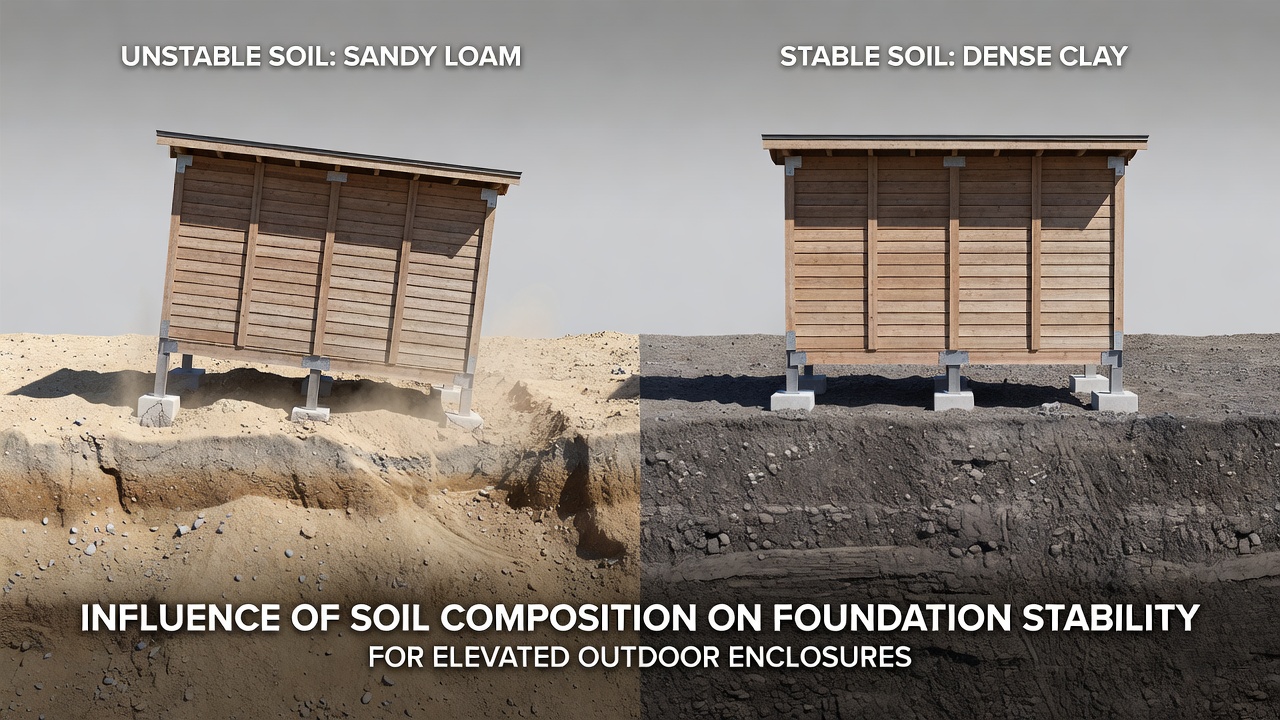
Soil composition plays a direct role in determining how well foundations perform under elevated outdoor enclosures such as raised decks, gazebos, and storage structures built on piers or stilts, and data from geotechnical assessments show that different particle sizes, mineral content, and moisture retention properties alter load distribution and long-term settlement patterns. Clay-rich soils often exhibit high plasticity indices that cause volume changes during wet and dry cycles, whereas sandy or gravelly profiles provide higher initial friction angles yet may require deeper embedment to reach adequate bearing strata.
Primary Soil Categories and Their Engineering Properties
Researchers classify soils into groups based on particle size distribution and Atterberg limits, and these classifications correlate strongly with measured foundation performance in field studies. Cohesive soils dominated by clay minerals demonstrate undrained shear strengths that vary with water content, producing differential movement when moisture migrates unevenly beneath pier footings. Granular soils, by contrast, transmit loads through particle interlock, and their permeability allows rapid drainage that reduces hydrostatic pressure on embedded elements. Silt mixtures occupy an intermediate position where frost heave or piping can develop under certain climatic conditions.
Standard penetration test results compiled across multiple sites indicate that bearing capacities range from under 50 kPa in soft clays to more than 300 kPa in dense gravels, and these values guide the spacing and depth of piers used for elevated enclosures. Laboratory triaxial tests further reveal that organic content above 5 percent reduces effective strength parameters, prompting engineers to specify soil replacement or chemical stabilization in such zones.
Effects on Elevated Foundation Systems
Elevated structures transfer concentrated loads through discrete piers or helical piles rather than continuous footings, and this configuration magnifies the influence of localized soil variability. When piers encounter strata with differing stiffness, the structure experiences rotation or tilting that can exceed serviceability limits defined in design codes. Moisture-induced swelling in expansive clays exerts uplift forces on shallow pier sections, while scour in sandy streamside locations removes lateral support and increases buckling risk for slender columns.
Monitoring data collected from instrumented sites demonstrate that seasonal groundwater fluctuations alter effective stress around pier tips, and these changes produce measurable settlement rates of several millimeters per year in susceptible profiles. In regions where expansive soils predominate, engineers incorporate void formers or adjustable pier caps to accommodate movement without compromising the superstructure.
Site Investigation and Classification Practices
Current practice begins with borehole drilling and cone penetration testing to establish soil stratigraphy, and results feed directly into foundation design calculations. Borehole logs record changes in soil type at 0.5-meter intervals, allowing identification of weak layers that require pier extension to competent material. Laboratory classification tests determine plasticity index and shrink-swell potential, which inform whether additional reinforcement or drainage measures become necessary.
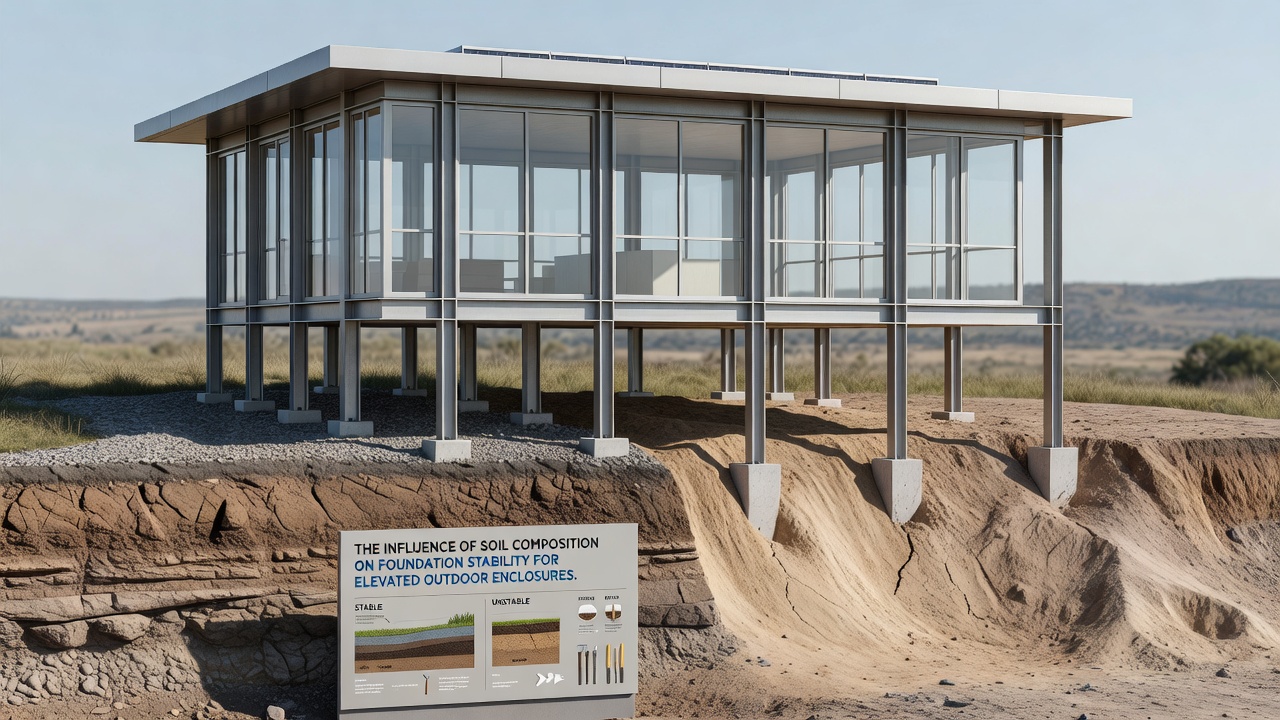
Geographic information systems maintained by national geological surveys supply preliminary soil maps that help prioritize detailed investigations, and these resources have been updated with new LiDAR-derived terrain data released in September 2026. Such maps highlight areas where glacial till or alluvial deposits create abrupt transitions that challenge uniform foundation performance.
Design Adjustments and Mitigation Techniques
Engineers select pier diameters and embedment depths according to calculated allowable bearing pressures, and they incorporate geogrid or geotextile layers when soft surface soils demand load distribution. Chemical grouting or lime stabilization improves shear strength in clay zones, while driven piles bypass problematic layers entirely in granular soils prone to liquefaction during seismic events. Drainage systems installed around pier clusters reduce moisture cycles that trigger volume change in expansive materials.
Building codes in North America reference allowable soil pressures tabulated by the USDA Natural Resources Conservation Service, whereas Eurocode 7 adopted across the European Union provides partial factor methods that account for soil variability in limit state design. Both approaches emphasize the need for site-specific testing rather than default values when elevated enclosures support significant live loads or occupy sloped terrain.
Long-Term Performance Observations
Post-construction monitoring programs record settlement and tilt over multi-year periods, and aggregated results indicate that structures founded on properly characterized soils exhibit movement well below tolerance thresholds. Conversely, cases where soil investigation was limited to visual inspection show accelerated distress within five years, particularly when seasonal moisture extremes coincide with high structural loads. Retrofitting often involves underpinning with additional piers or soil nailing to restore stability once movement is detected.
Conclusion
Soil composition determines the load-carrying capacity, settlement behavior, and durability of foundations supporting elevated outdoor enclosures, and systematic investigation combined with appropriate design adjustments produces reliable performance across varied site conditions. Updated mapping resources and standardized testing protocols continue to refine predictive models, enabling engineers to match foundation systems precisely to subsurface profiles.